
Why South African Businesses Are Still Losing Money to Time Theft
Take your average hourly wage. Multiply it by 15 minutes. Multiply that by every employee on your payroll. Multiply that by every working day in a month.That is not a hypothetical. For many South African businesses, those lost minutes quietly add up to a cost that never appears as a line item on a balance sheet. Not stock going missing. Not cash disappearing from the till. Just minutes that were paid for but never worked, hidden in attendance records that nobody is checking.
What time theft actually looks like
It rarely looks like theft. That is the problem.
It looks like a colleague clocking in for someone who is still stuck in traffic. It looks like a supervisor rounding “8:47” up to “9:00” because nobody wants to dock a friend’s pay. It looks like a former employee still appearing on the payroll months after they have left. It looks like a paper register filled out in the same handwriting because nobody is checking.
None of it feels like fraud in the moment. It feels like a favour, a rounding error, or admin that nobody has time to question. But it compounds. A few minutes a day, multiplied across every employee and every working day, quickly becomes a measurable cost to the business.
Why traditional attendance systems struggle
Paper registers rely on honesty and consistent oversight. Swipe cards assume the person carrying the card is the person it belongs to, an assumption that breaks down the moment colleagues agree to cover for one another. PIN codes introduce a different risk: credentials can be shared just as easily as a text message.
Traditional attendance methods such as paper registers, cards, and PINs verify credentials rather than identity. That creates a gap, and in any cost-sensitive business, gaps tend to be exploited.
How facial recognition helps
Facial recognition helps close that gap by verifying the identity of the person clocking in, rather than simply checking a card, PIN, or signature. When combined with liveness detection, it can also help prevent attempts to use printed photos or other spoofing methods.
For many South African businesses, the technology itself is not the concern. The bigger misconception is that facial recognition requires expensive terminals, specialist installers, and a significant upfront investment. That assumption is becoming increasingly outdated.
The device is already in your pocket
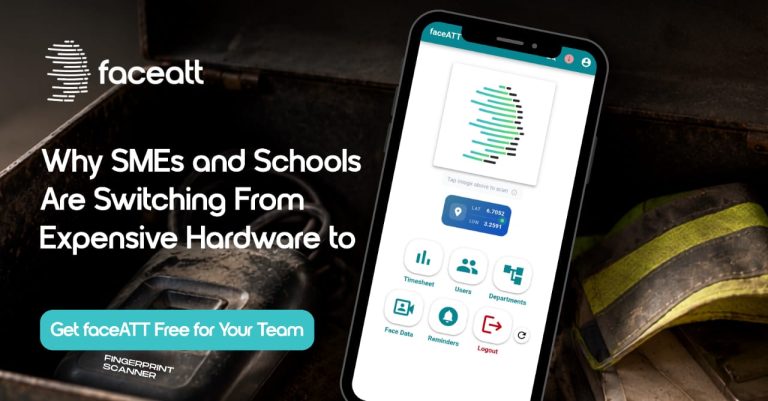
Many facial attendance systems still rely on dedicated hardware that must be purchased, installed, and maintained, often adding thousands of rand to the cost of deployment before the system is even operational.
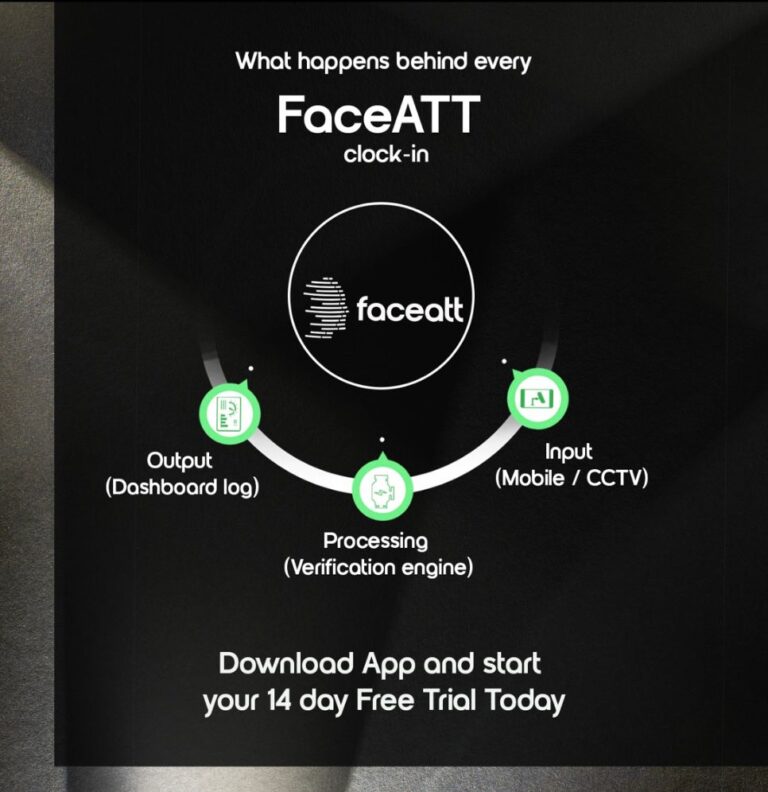
faceATT takes a different approach. It runs on a smartphone your business already uses. There is no dedicated terminal to purchase, no installer to schedule, and no additional hardware to maintain. Setup can typically be completed in minutes, with attendance verification taking place on a device your team already carries.
Running the numbers on your own business
Here is a simple way to estimate your potential exposure:
Average minutes lost per employee per day × hourly wage × number of employees × working days in the month
Even if each employee loses just 10 to 15 minutes a day through rounding, buddy clocking, or early sign-outs, those minutes can translate into significant payroll costs over the course of a month. Now compare that with the cost of preventing it.
faceATT’s free plan supports businesses with up to 10 users. Paid plans start at R47 per user, per month, including facial verification, geo-fencing, and attendance records.
For many SMEs, the monthly subscription is considerably lower than the ongoing cost of unnoticed time theft.
Built with privacy in mind
Biometric attendance data should be handled responsibly. Under South Africa’s Protection of Personal Information Act (POPIA), employers remain responsible for obtaining appropriate employee consent and managing the lawful use of employee information; faceATT acts as the operator, processing attendance data only on the employer’s instruction.
You do not need a forensic audit. You need a system people cannot work around.
You do not need to spend weeks reviewing paper registers or investigating payroll records to know something is wrong.
You need an attendance system that verifies identity the moment someone clocks in, using hardware you already have, without relying on cards to borrow, PINs to share, or signatures to interpret.
That is the idea behind faceATT: attendance data your business can trust, without the hardware bill.
Start your free trial at www.faceatt.com