
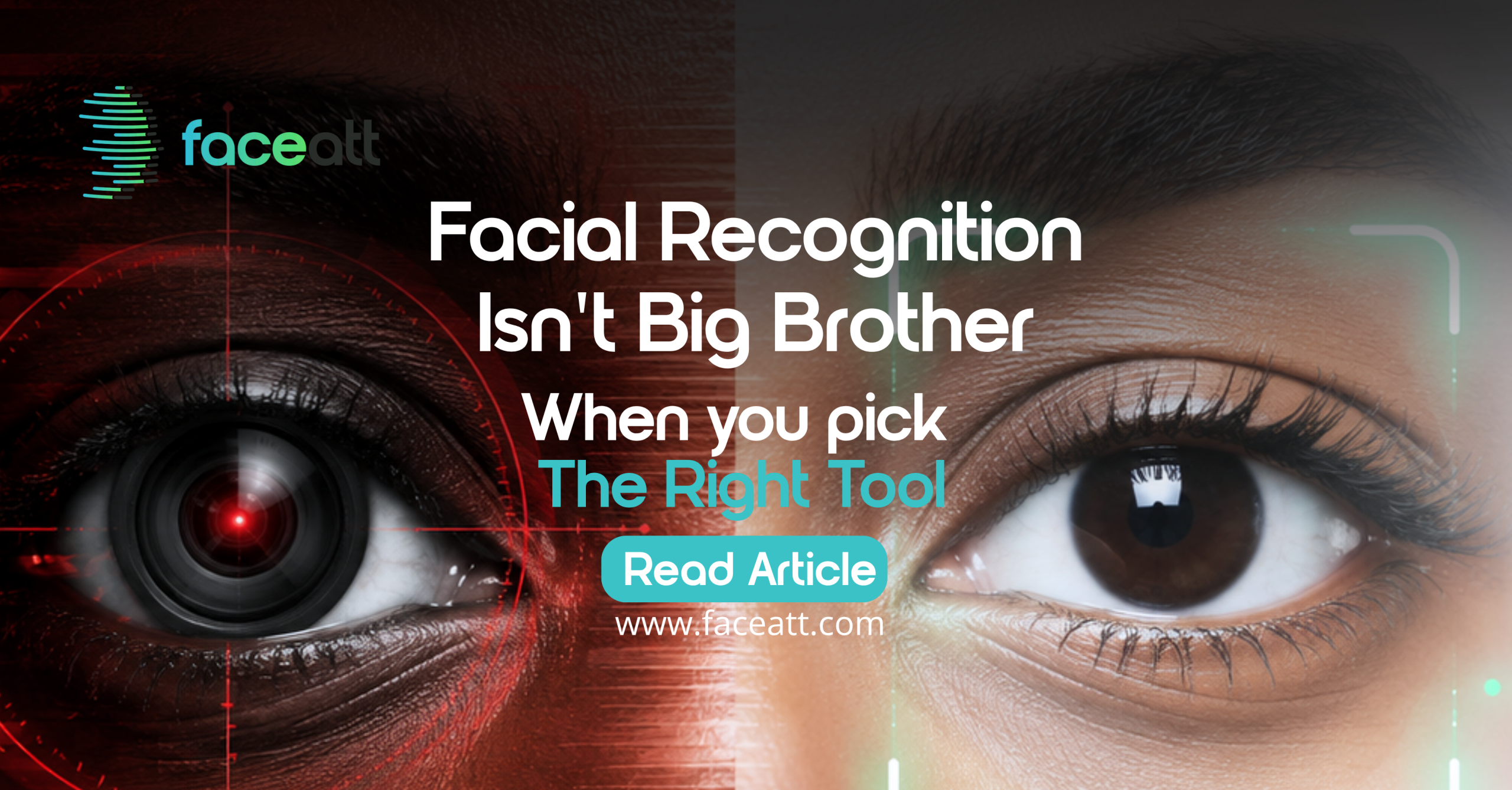
Facial Recognition Isn’t Big Brother When You Pick the Right Tool
The fear most people bring to the table
Say “facial recognition” in a staff meeting and watch what happens. Someone mentions a movie. Someone mentions a government database. Someone jokes about being tracked. That reaction isn’t irrational; it’s just misplaced. Most people’s mental image of facial recognition was built by dystopian films and news stories about mass surveillance, not by anything that actually resembles a workplace attendance tool.
That gap between the fear and the reality is where this article lives. Facial recognition, as a category, covers everything from government surveillance networks to a phone unlocking when you glance at it. Lumping all of that together isn’t fair to the technology, nor to the businesses trying to use a small, specific slice of it responsibly.
The honest answer is: facial recognition isn’t inherently invasive. What matters is which tool you pick, what it actually does to a face, and whether the people building it considered consent and privacy before they focused on features.
How faceATT confirms a real person, not a photo
One of the quieter problems with basic face-based attendance systems is that they can be fooled. Hold up a photo of an employee, and a weak system might clock them in. That’s not just a technical flaw; it’s a fraud risk.
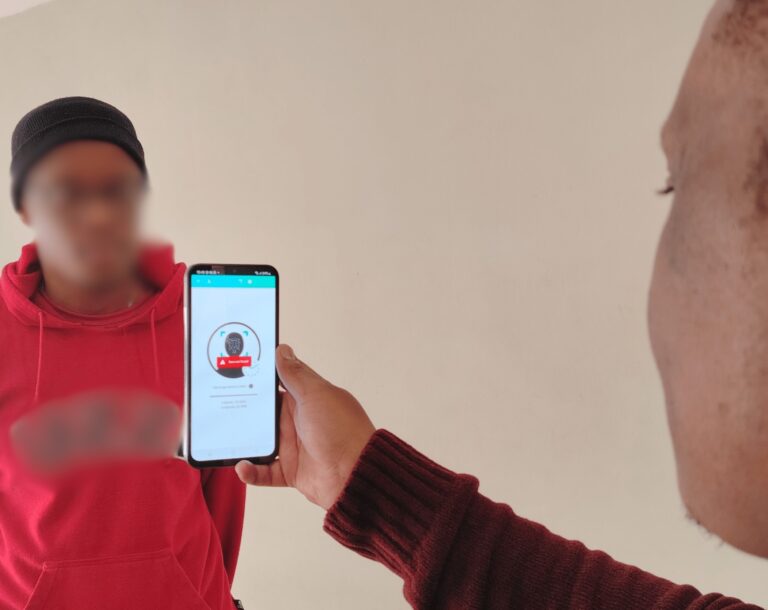
faceATT uses liveliness detection to close that gap. In plain terms, liveliness detection checks that there’s an actual living person in front of the camera at the moment of the scan, not a printed photo, not a video playback, not a static image pulled up on someone else’s phone. It’s the difference between “a face was shown to the camera” and “a real person was present and verified in real time.”
The important part for anyone nervous about this: liveliness detection is a verification step, not a recording step. It confirms presence and moves on. It isn’t building a video archive of employees or storing footage of the check.
What actually happens to a face scan
This is the part people usually get wrong, and it’s worth being precise about it.
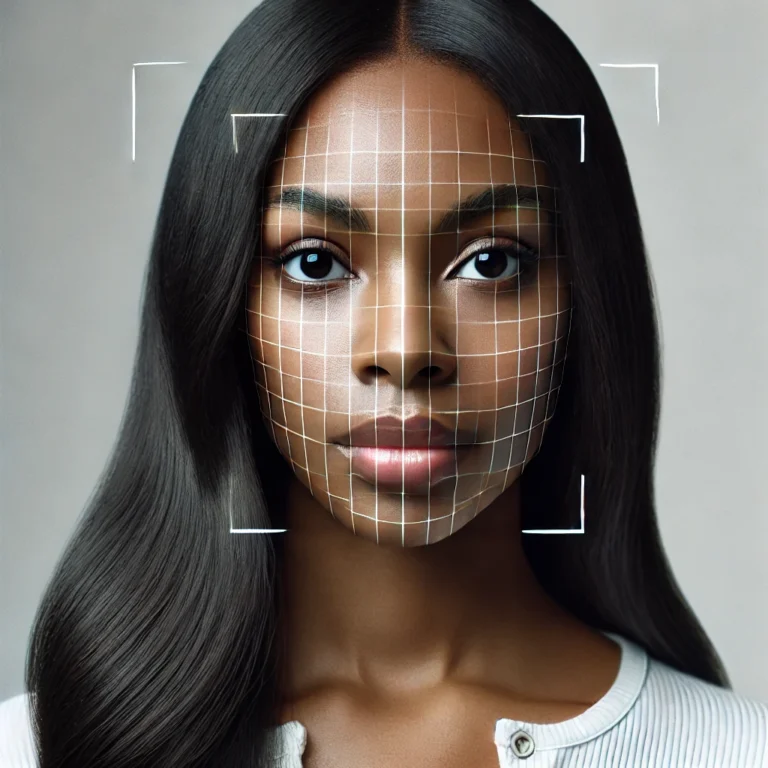
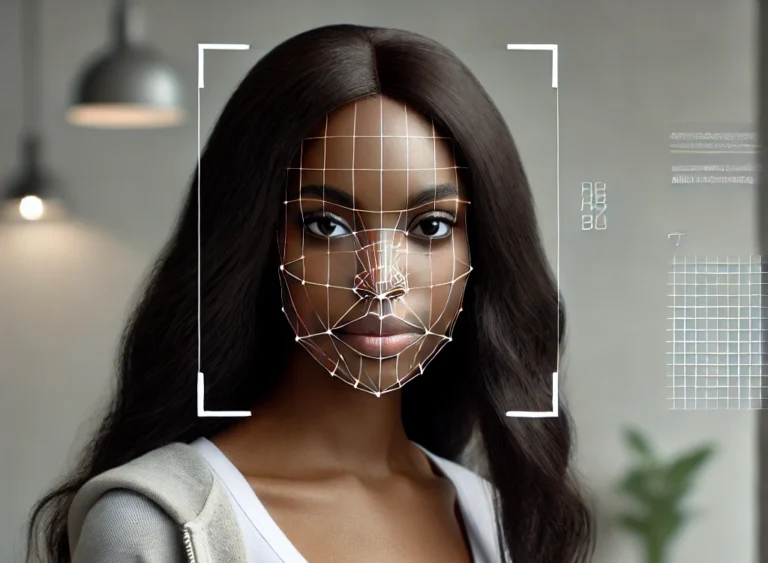
When someone enrols on faceATT, the system doesn’t keep a photo album of their face sitting in a database somewhere. It converts the face into a mathematical template, essentially a set of numbers that represents the geometry of that face. That template can’t be reverse-engineered back into a photograph. There’s no image to leak, because the image was never the thing being stored.
On top of that template, some plans do capture and store a photo at each clock-in and clock-out; this is the point-in-time image that gives an employer auditable proof of attendance, and it’s viewable by the employee themselves, not hidden from them. That’s a deliberate design choice: transparency over secrecy. Nobody is scanning faces into a black box they can’t see into.
So the honest version of this point isn’t “nothing is ever stored.” It’s: there’s no reversible biometric image bank sitting behind the scenes, and any clocking images that are captured are visible to the person they belong to, not just to management.
POPIA vs GDPR, and what South African businesses actually need to worry about
If you’ve read anything about facial recognition compliance, you’ve probably seen GDPR mentioned more than POPIA. That’s understandable; GDPR gets more global press, but it’s not the law that governs a South African business processing South African employees’ data.
POPIA (the Protection of Personal Information Act) classifies biometric data as “special personal information,” which means it carries a higher standard of care than an email address or a job title. Under POPIA, two roles matter:
- The employer is the responsible party. They onboard their own staff, they get consent directly from their employees, and they decide why the data is being processed and who inside the business can see it.
- faceATT is the operator. It processes attendance data because the employer instructed it to, not because it went out and collected consent on its own. It doesn’t set the purpose, it executes on the employer’s authority.
That distinction matters practically. It means the employer keeps control of the consent relationship with its own people, while faceATT’s job is to handle the technical processing responsibly: data hosted in South Africa, encrypted in transit and at rest, sitting behind a web application firewall with intrusion detection, and deletable on request. faceATT was built around POPIA’s requirements from the start, not retrofitted to comply after the fact.
The gap nobody else is talking about
Search around for facial recognition attendance tools, and you’ll find a lot of talk about accuracy rates, speed, integrations, and pricing tiers. What you won’t find much of is anyone talking about ethics, consent, or what actually happens to the data once it’s captured.
That’s the gap. Most tools in this category treat privacy as a footnote, something for the terms and conditions page, not something worth explaining to the people whose faces are actually being scanned. faceATT takes the opposite approach: lead with how the data is handled, then talk about features. If a vendor can’t clearly explain what happens to a face scan the moment it’s captured, that’s a question worth asking before signing anything.
Helping your team feel okay about it
If you’re an HR manager rolling this out, the resistance you’ll get from staff is rarely about the technology itself; it’s about not knowing what happens to their information. A short, honest internal message solves most of that. Something like:
“We’re moving to facial recognition for clocking in and out. Here’s what that actually means: the system checks that you’re really you and that you’re really there; it doesn’t store a photo of your face in a way that can be reconstructed, and you’ll always be able to see your own attendance records. This isn’t about watching you, it’s about making sure everyone gets credited fairly for the hours they work.”
Employees who understand the “why” behind a system are far more likely to accept it than employees who are just told to look at a camera and hope for the best.
The bottom line
Facial recognition earned its bad reputation somewhere else, not from workplace attendance tools built with consent and transparency in mind. The technology itself isn’t the problem. The question is always which tool is behind it, and whether that tool was built to protect the people using it or just to collect their data.